




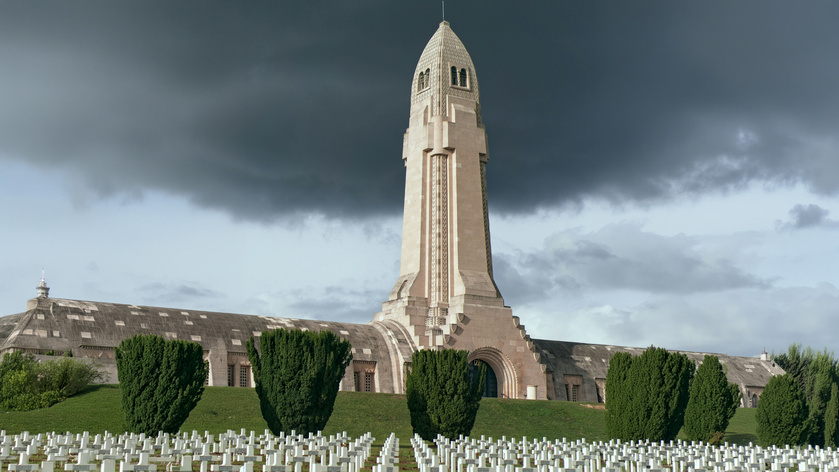
Some seventeen million dead. “When you see millions of the mouthless dead … Say not soft things as other men have said,” Charles Sorley wrote, before becoming one of them. He was twenty when he was killed at the Battle of Loos in October 1915. The poem was found afterward in his kit. The dead are mouthless now: we cannot question them, console them or ask what any of it was like. Yet Sorley’s poem is itself part of what they leave behind—not a political instruction, but an act of witness through which one life continues to make a claim upon lives not yet born. This is one way a moral inheritance passes between generations: not only through doctrines and laws, but through stories, images and remembered examples that shape what people notice, what they honour and what they understand themselves to owe. The strand with which this essay is concerned is the knowledge that other lives make claims upon our own, and that a world in which liberty has become ordinary can be preserved only by people willing to answer those claims. Some have answered them at the cost of their lives, although in forms and for reasons no later argument has the right to simplify. Through what they did, what they suffered and what they left behind, the dead speak to us one life at a time. Seventeen million is not an image. It is the point at which images fail.
This essay is not really about the First World War, or about any single crisis. It is about why Sorley can move us when seventeen million cannot; why certain truths enter us as recognition while others, no less true, remain inert; and what that difference might explain about the survival of this thing we call liberal democracy. It will turn to two moments involving three men, separated by decades and borders. None of them needed—and perhaps none would have been able—to reconstruct in philosophical language the moral inheritance upon which he acted. They knew it in its stronger form: as something that had to be done. In what they chose to do, each revealed some part of an inheritance that may still endure among us. Whether it also endures in you is one of the questions their stories will ask. Behind that question lies a plea: to see the extraordinary effort and sacrifice concealed within ordinary liberty, and to recognise the ingratitude of discarding such an inheritance for an order imagined in theory and untested in life.
Naming the political form that inheritance takes is part of the difficulty. Liberal no longer suggests liberty to everyone. To some it means a faction: censorious in the name of tolerance and inclined to treat disagreement not as a necessary condition of a free society but as evidence of moral failure. To others, it names the hypocrisies of societies that proclaimed universal freedom while practising conquest, exclusion and oppression. Neither association is imaginary, but neither encompasses what I mean. If the word obstructs rather than clarifies, cross it out wherever it appears and write constitutional liberty, self-government or simply a free society. The name matters less than the thing.
And the thing is easily missed because it is most often experienced as an absence. It is the knock at the door that does not come. It is the joke told about a politician, and the silence that does not fall afterward. It is the private space in which you may vote no; the freedom to leave a church, a party, a profession or a place; the right to be judged by fellow citizens rather than condemned by decree; the demand that power give an account of itself before it enters your home, confines your body or takes your life. It does not promise that you will be happy, prosperous or wise. It promises something at once more modest and more profound: that your life does not belong to power. It is liberty made ordinary—so ordinary that we have learned to mistake it for the natural condition of mankind.
Ordinary liberty was ordinary to earlier generations too, but many of them understood its meaning more clearly than many people do now. The difference is that its contingency remained close enough to remember. They lived among people who could recall its absence, beneath monuments whose meaning they still understood, and in a Europe divided by an Iron Curtain, beyond which the knock did come and the silence did fall. The freedoms themselves were familiar; so was the knowledge of their fragility. What has faded is less the inheritance itself than the living memory of its absence that once made the inheritance intelligible.
The problem here, then, is not catastrophe itself, nor even the immediate threat of it, but what happens to its memory after both have receded. For those who endured catastrophe, or lived within reach of regimes capable of inflicting it, the fragility of ordinary freedom required little explanation. But how can knowledge born of experiences you never shared be carried across time once the threat has passed and the witnesses have gone? Numbers can establish the scale of a catastrophe, but they cannot give that scale a body. For that, generations have turned to witnesses and artists, who preserve in a single human image what magnitude alone cannot make us feel. The same faculty that allows us to feel something of a war we never saw may also allow us to remember the meaning of a freedom we have never lacked—to understand that a world of ordinary liberty endures only while people are willing to preserve it for one another, sometimes at the cost of their lives.
The First World War left an extraordinary body of such testimony. Wilfred Owen did not write seventeen million. He wrote of one sentry blinded by a shell burst and hurled into the darkness of a dugout: “O sir, my eyes—I’m blind—I’m blind, I’m blind!” Isaac Rosenberg did not write seventeen million either. He wrote of wheels that “lurched over sprawled dead.” Neither image tells us whether the war was necessary, avoidable, just or futile. Neither attempts to. They do something at once simpler and more essential: they make an otherwise incomprehensible quantity of suffering briefly imaginable. The number gives us the magnitude. The particular gives the magnitude somewhere to live.
Through such testimony, the misery and sacrifice of the past pass from the page into the mind’s eye. That power allows a moral inheritance to cross generations. That power can be turned against what it serves. The same faculty that makes one death unbearable can make an entire inheritance disappear—not through falsehood, but through selection. The particular is not inherently truthful: a fragment of reality may reveal the whole, but it may also impersonate it. The most effective propagandist need not invent a fact, forge a photograph or fabricate a grief. Selection is often enough. The suffering may be real, the injustice real, every detail entirely authentic—and yet the picture they compose may be a deception that the fuller reality would never support. The wound is real; the lie consists in presenting it as the whole body. To persuade people that a free society has already failed, one need only make each of its failures vivid and each of its achievements invisible: its failures particular, its inheritance abstract.
Consider Steven Pinker, one of the most prominent defenders of the Enlightenment inheritance. In Enlightenment Now, Pinker places before us a formidable statistical case for the modern world. His data may establish that human beings live longer, suffer less violence, escape poverty more often and possess greater freedom than their ancestors. Yet place beside the graph the photograph of a single child killed in war and we encounter a truth the graph cannot contain. Because the photograph makes its truth present in a way the graph cannot, it can be offered as a refutation of Pinker’s account—and felt as one—even though it does not by itself contradict his data. The child is not an anecdote to be averaged away; neither is she evidence that the average is wrong. The two forms of truth answer different questions. The graph can tell us what has happened to humanity. It cannot tell us what this child means. A corresponding moral argument encounters the same limit: however sound it may be, it reaches the listener as an argument, and arguments are not what people cry over. That is not a failure of reason. It is a failure to recognise that one kind of truth cannot do another kind’s work.
And yet the photograph’s power has a limit of its own. Those moved by it return to lives structured by freedoms they scarcely notice, seldom considering the extraordinary effort and sacrifice through which those freedoms were secured, defended and made ordinary. Indeed, they may exercise those very freedoms in making the suffering visible. They publish without permission, accuse the powerful, appeal to the consciences of strangers and do so without fearing that the accusation will bring a knock at the door. None of this makes the child less dead or the accusation less just. It means only that the moral instinct behind the accusation—that a distant life matters, that power must answer for suffering, that no death should disappear into a number—remains part of the older inheritance carried within liberal society. A free society can stand accused by a conscience it has not extinguished.
Neither form of truth is sovereign. A story may disclose what the graph has failed to count, reveal a category badly drawn or give moral weight to suffering concealed inside an improving average. But it cannot establish a general rule merely through the force with which it moves us. The graph asks whether the story is representative; the story asks whether the graph has measured what matters. The graph prevents an exceptional case from impersonating the rule; the story prevents the rule from erasing the person. Each corrects the temptation of the other.
Conscience alone, however, cannot preserve a political order. If the case for liberal democracy is to reach those whom the graph and argument cannot, its defenders need human beings in whom its principles become visible: men and women whose choices reveal what the inheritance asks of us and what its loss would mean. We commonly imagine the state as machinery—or, in its more philosophically respectable form, as the artificial power Hobbes called Leviathan. Fear can explain why people submit to authority, and security why they tolerate it. Neither explains why generations become devoted to a political inheritance or, in extremity, choose to die for it.
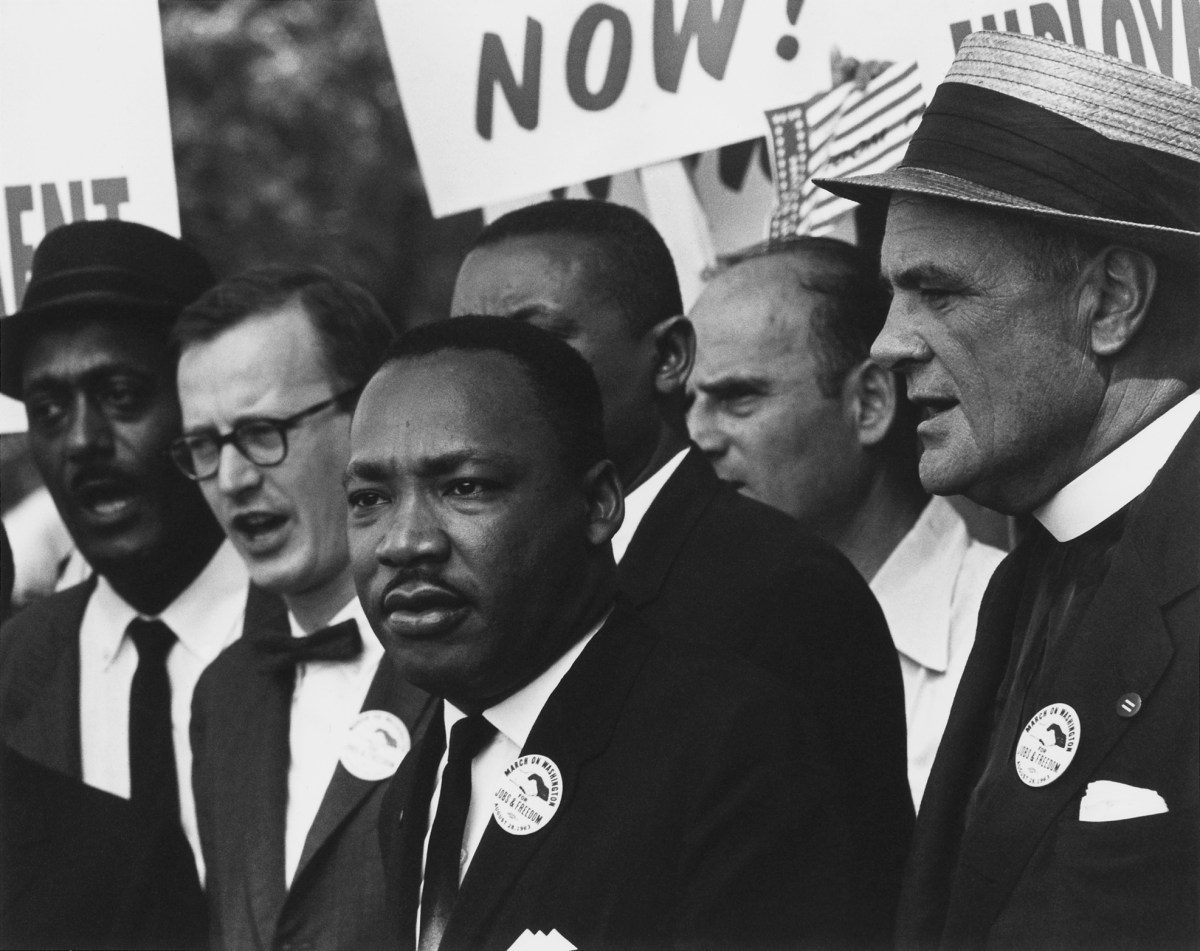
People rarely love the machinery of government. They love a country through stories and symbols, buildings and rituals, remembered sacrifices and the names of the dead. The American republic made its abstractions visible in this way: a date—1776; a place—Independence Hall; words children could learn; and human beings in whose lives its promises and betrayals could be seen. Washington, Lincoln and King came to embody parts of the republic’s unfinished claim about what a person is owed. At their best, its monuments remind Americans that their inheritance is also a promise not yet kept. Abolitionists, suffragists and civil-rights marchers accused America in the language of America.
Warning what would happen if liberal democracy were dismantled explains why we should hesitate, but not why we would grieve. An inheritance is more like an old, tarnished locket containing a faded photograph. To a stranger it may be almost nothing; to its inheritor it contains attachments accumulated across generations, none visible in the object itself. Political institutions are not heirlooms, and age alone makes nothing just. But liberal democracy shares this quality with the locket: its meaning resides not only in what its institutions do, but in the lives lived under them, the sacrifices made for them and the memories entrusted to them. Without those lives and memories, we may understand what the institutions do while losing any sense of what they mean. Severed from the inheritance that animates them, they become bureaucratic necessities, like a water utility or an electricity company: vital, largely unnoticed and visible chiefly when they fail. People may depend upon such machinery, but they will not understand themselves as custodians of the world it sustains. We have become remarkably good at explaining liberal democracy’s machinery, and remarkably bad at remembering the human meaning stored inside it. When a society loses the capacity to see the human lives stored inside its own institutions, it suffers a form of historical amnesia—a loss of context that contemporary critics have weaponized into a theory of liberalism's inevitable collapse.
An inheritance this difficult to see is easily declared dead. The most serious obituary for liberal democracy is now being written by the post-liberal right. Its argument is not merely that liberal societies have become divided, lonely or morally uncertain. Those conditions are symptoms of a deeper failure. Liberalism, it claims, was poisoned at conception: founded upon an idea of the autonomous individual that would inevitably dissolve the families, faiths, communities and national traditions upon which every durable political order depends. Its centuries of prosperity were not a refutation of the diagnosis, but the long interval during which it consumed an inheritance it could neither acknowledge nor replenish. What appears to be crisis is therefore collapse; what appears to be exhaustion is the final stage of an illness present from the beginning.
The obituary has been written before. Its authors might remember Mark Twain—although not quite the version usually repeated. After a false report of his death circulated in 1897, Twain wrote: “The report of my death was an exaggeration.” Liberal democracy has been prematurely buried by obituarists who appeared to possess better evidence than those writing today. German victory in the First World War would have left much of liberal Europe subordinated to an authoritarian empire. Fascism destroyed democratic institutions wherever it took power and came close to mastering Europe. Soviet communism confronted liberal democracy with an empire capable of ending civilisation in an afternoon. Fascist and communist theorists did not rely upon force alone: they explained at length why liberal democracy was decadent, exhausted or condemned by history—why its failure followed inevitably from what it was. The liberal democracies helped defeat fascism and outlasted the Soviet Union anyway.
These adversaries were not equivalent, and past survival guarantees nothing. But history places a burden upon today’s obituary writers: they must explain why the present will prove more fatal than military catastrophe, fascist conquest, communist empire and nuclear terror. Liberal democracy can die. The point is that reports of its death have repeatedly mistaken crisis for collapse. That case is not sentiment. It is history.
None of this proves that liberal democracy is the best political arrangement imaginable, or that age can sanctify injustice. It establishes something more modest: an inherited order under which generations have lived through extraordinary gains in security, prosperity and freedom is entitled to the benefit of the doubt. The record Pinker describes does not prove that liberal democracy caused every improvement, still less that no alternative could have produced something better. It does prevent the history of liberal society from being described as simple failure. Those who would displace the settlement therefore bear the burden of showing why their untried design deserves precedence over accumulated experience.
Yet the historical argument has an obvious limit. A civilisation that survives armies, empires and nuclear confrontation may still decay from within. The post-liberal claim is that this is precisely what happened: liberal democracy survived its external enemies only to dissolve the moral inheritance upon which its survival depended. Verdun, Hitler and the Soviet Union cannot answer that charge. It must be tested elsewhere—in the people who live inside liberal societies now, and in what they still understand themselves to owe one another.
Among the most influential advocates of the post-liberal case is Yoram Hazony. In The Virtue of Nationalism and Conservatism: A Rediscovery, he presents Enlightenment liberalism not as an inheritance but as a rationalist attempt to construct political order from universal abstractions, severed from the loyalties—family, faith, history and nation—that make collective life durable. His strongest insight is one with which this essay agrees: no civilisation can live indefinitely as a proposition.
The disagreement concerns not whether inheritance matters, but whether Hazony can recognise one he dislikes. He writes as a steward of Edmund Burke, who opposed the revolutionary conceit that society could be reconstructed from abstract principles, as though a nation were a blank page rather than a living trust among the dead, the living and those yet to be born. Burkean conservatism begins with the authority of an evolved settlement. It reforms that settlement through its own institutions and traditions; it does not first require the inheritance to justify itself before the tribunal of a theory—even one offered in its defence.
Hazony nevertheless denies precisely this deference to the liberal dimensions of the constitutional order actual Western peoples have inherited. He treats centuries in which parliaments, courts, liberties, customs and political expectations became interwoven as though the resulting settlement could be divided cleanly between an authentic conservative inheritance and the corruption introduced by a false philosophical premise. He then appeals to a recovered theory of conservative democracy through which its liberal character might be displaced. This is not preservation through improvement. It reproduces the central conceit of the radicals Burke opposed: an existing society is measured against an intellectual scheme, pronounced illegitimate and summoned to reconstruct itself upon supposedly purer foundations. Hazony’s preferred principles are older and his intended destination different, but the revolutionary grammar is the same. His quarrel may be less with rationalism itself than with the rationalists who won.
That inversion of Burke rests upon a further error: mistaking the philosophical articulation of a civilisation for its creation. The philosophers of liberalism did not create the civilisation they described any more than legislators created the moral intuitions they placed into law. More importantly, the order Hazony reduces to their propositions was built, inhabited and amended by generations who never read them. Ordinary men and women carried it in custom and expectation. Philosophers gave that inheritance a language; they did not summon it into existence. Liberty became durable by becoming ordinary. Locke did not cause a people to awaken to their individual moral standing because they had read the Second Treatise. He articulated and accelerated a change that no book could have manufactured alone. In a free society, durable political change usually follows changes in what ordinary people regard as legitimate, shameful or unthinkable. The law becomes secure not merely when a statute forbids arbitrary arrest, but when a population confronted by it instinctively asks: By what right?
Hazony cannot escape this history merely by giving his theory the name of tradition. If his recovered conservative order first takes root in the habits and convictions of ordinary people, then it will emerge through the same gradual process of persuasion, adaptation and inherited practice by which liberal democracy became durable. If it does not, the formal order must be changed before the people themselves have changed. A political elite would then have to construct the society described by the theory and require ordinary people to become what its authors believe they ought to be. Hazony must therefore choose between accepting the slow authority of public consciousness and reproducing the rationalist imposition he condemns.
That second course is authoritarian in structure. A ruler, party or committee transforms the formal order and demands that the people transform themselves accordingly. The speed looks like strength; more often it reveals how little of the new order exists outside the commands of those enforcing it. Command changes behaviour faster than conscience, which is why such regimes return so readily to censorship, surveillance, denunciation and terror. From Bolshevik Russia through Mao’s Great Leap Forward to the Khmer Rouge’s Cambodia, attempts to force a society to become an idea have repeatedly ended in catastrophe.
Patrick Deneen, in Why Liberalism Failed, makes the more sweeping claim that liberalism “has failed because it has succeeded.” Writing in an era marked by deep economic dislocation, institutional decay, and a pervasive sense of social atomisation, Deneen offers a diagnosis that feels urgently compelling to many: that liberal democracy’s pursuit of autonomy was destined to dissolve the relationships and customs upon which flourishing depends, leaving the individual subject to the market and the state. Liberalism was broken, in this account, by the unfolding of its own first principles.
The indictment identifies something real. Liberal societies can consume moral resources they do not know how to replenish. Freedom can become detachment; autonomy can decay into isolation; markets and bureaucracies can intrude where families and communities once stood. But the thesis has a convenient shape: any surviving solidarity can always be explained away as residue, spending down a capital it no longer replenishes. A claim immune to counter-evidence in principle can only be tested against evidence in practice. The question is not whether atomisation exists, but whether it is complete—whether the moral inheritance beneath liberal democracy has actually died, or only appears to have died to a diagnosis built so that no answer could count against it.
The strongest form of the post-liberal indictment depends upon this claim of necessary severance. Liberal democracy did not invent the older moral inheritance, but neither philosophical liberalism nor life under liberal institutions has proved incompatible with its continued transmission among ordinary people. If that is true, the central critique fails in its deterministic form. This does not prove that the inheritance is inexhaustible, or that liberal democracy is superior to every other political arrangement. Nor need it. It refutes the claim that liberalism has already consumed the inheritance upon which it depends, and denies post-liberals the right to present its eventual destruction as a conclusion contained within liberalism’s first principles. What remains may be a serious empirical warning about cultural depletion. It is no longer a philosophical verdict.
The claim of severance cannot be settled by a philosopher’s genealogy of ideas. It must also be tested in the people who inhabit liberal societies now: in what they recognise, what they honour and what, when another life suddenly depends upon them, they understand themselves to owe. The two stories that follow are not offered as a verdict upon liberal society. Their purpose is narrower: to make visible an older moral inheritance as it passes into action, and to ask whether the society surrounding that action still understands what it means.
The first two men were strangers to one another when, just after midnight on 24 April 2021, they encountered a woman struggling in the Thames near London Bridge. Folajimi Olubunmi-Adewole, known to his friends as Jimi, was a twenty-year-old restaurant worker on his way home after his shift. He heard the woman screaming from the darkness and called the emergency services, but was adamant that he could not simply wait. His friend Bernard Kosia later remembered: “The whole time Jimi was saying, ‘I have got to save her.’ He was very adamant about it. He was taking off his clothes saying, ‘I have to save her, she is not dying.’” Joaquín García had independently seen the woman in difficulty and joined them at the water’s edge. He and Jimi removed some of their clothes, counted to three and entered the cold, dark water. García reached the woman and kept her afloat until emergency services rescued them. Jimi began struggling almost as soon as he entered the river and disappeared beneath it. His body was found at six o’clock that morning, almost six hours after he entered the water.
There was time enough to choose, but not enough to construct a theory. People on the bank urged the men not to enter. There was no opportunity to calculate the current, the effects of cold water or the probability that attempting one rescue would leave two more people needing to be saved. What governed Jimi and García was not calculation but recognition. A woman was going to die; therefore they had to try to save her. To call this a reflex would make it sound automatic, mechanical, somehow beneath choice. It was not beneath choice. It was what choice becomes when a moral conviction has entered so deeply into a person that he perceives the obligation before he can articulate it. Jimi did not first establish that the woman belonged to some category of people whose lives mattered. He heard a stranger crying out and understood that her life made a claim upon his own.
What followed matters too. Nearly 150,000 people who had never met Jimi signed a petition asking that his courage be commemorated. The call to honour him received support from political and civic figures across London, and a plaque bearing his name was eventually installed beside the river near the place from which he entered it. None of this proves that those who honoured Jimi would have done what he did. It establishes something more modest but still important: they knew what his act meant. They did not need to be persuaded that a young man who died attempting to save a stranger had placed his society in his debt. They were recognising something, not concluding it.
That recognition has a history. Centuries before liberal democracy had a name, the book of Leviticus commanded: lo ta’amod al dam re’echa—do not stand idly by your neighbour’s blood. Jewish tradition understood the command in strikingly literal terms: one who sees another drowning and is able to intervene is not permitted simply to watch. The law of England and Wales does not generally impose an equivalent duty to rescue. Whatever moved Jimi and García, it demanded more of them than the law of the country in which they stood.
The same chapter of Leviticus commands its hearers to love the stranger as themselves. The Christian tradition carried that moral claim forward through the story of the Good Samaritan. When a lawyer asked Jesus who counted as his neighbour, Jesus answered not with a definition but with a human scene. A man lies wounded beside a road. A priest passes him; then a Levite. The man who stops is a Samaritan, someone divided from the wounded man by inherited hostility, who nevertheless binds his wounds and pays for his care. Jesus ends by reversing the lawyer’s question. He does not define the class of people whom the lawyer must recognise as neighbours. He asks which man chose to become one.
Neither Leviticus nor the parable of the Samaritan is itself liberal democracy. That is not an objection to their place in this story; it is the point. Liberal democracy did not spring fully formed from an argument made in the eighteenth century. It inherited a moral world built across millennia, and these texts stand close to its foundations. Through their long afterlives in Jewish and Christian thought, they helped form a civilisation in which the worth of a human life could come to be understood as prior to rank, tribe, nationality and power.
But universal moral worth, personal duty to the stranger and equal standing before public power are not identical claims. The ancient commandment says that the stranger is not beyond my concern; the Samaritan shows that inherited division does not release me from the obligation to become his neighbour. Liberal constitutionalism adds a distinct political demand: the stranger need not become my neighbour before the state owes her justice. Her life makes a claim upon the law before anyone knows her name.
What matters here is continuity. Neither law nor political philosophy required Jimi and García to enter the Thames. In the darkness beside London Bridge, with no bond to the woman except the fact that she was going to die, they acted upon the older recognition that her life made a claim upon their own. Whether either consciously thought of Leviticus or the Samaritan is beside the point. The moral world expressed in those texts had not survived merely as doctrine, but as a habit of perception. An inheritance is deepest not when its words are repeated, but when its meaning has become instinct. Their actions show something narrow but decisive: the liberal society they inhabited had not cut them off from an inheritance older than liberal democracy itself.
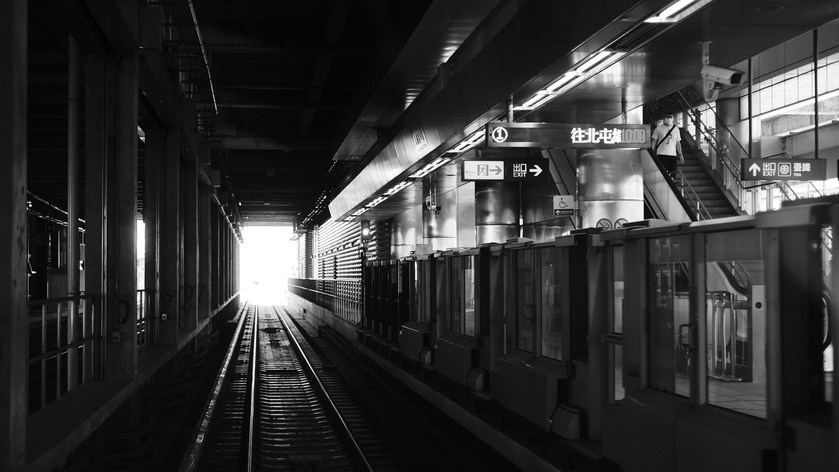
Fourteen years earlier, beneath the streets of New York, Wesley Autrey had been given much the same choice. Shortly before one in the afternoon on 2 January 2007, Autrey, a fifty-year-old construction worker and Navy veteran, was waiting for a train at the 137th Street–City College station in Manhattan with his two young daughters. Nearby, twenty-year-old film student Cameron Hollopeter suffered a seizure and stumbled from the platform onto the tracks. The lights of an oncoming train were already visible. Autrey had seconds in which to act, and two daughters standing close enough to need him too. He jumped anyway. He tried repeatedly to lift Hollopeter back onto the platform; when he realised there was no longer time, he pushed him into the drainage trough between the rails and lay on top of him. The train passed overhead, close enough to leave grease on Autrey’s cap. Both men survived. “I don’t feel like I did something spectacular; I just saw someone who needed help. I did what I felt was right,” Autrey said afterward.
The press reached almost immediately for a name the tradition already had waiting: the “Subway Samaritan.” Autrey had re-enacted the parable’s moral structure without needing to quote a word of it. Hollopeter was bound to him by neither blood nor friendship nor any prior obligation. He was simply the man lying helpless in Autrey’s path. Asked where the instinct to help had come from, Autrey gave an answer more intimate than any political theory: “My mom brought us all up like that.” Here was inheritance in its most literal form—a moral understanding passed from one generation into another until, in the moment it was needed, it appeared as action. This was not merely moral capital lingering after its source had disappeared. It was an inheritance still being transmitted within a liberal society.
The country recognised it. Autrey was honoured by the city, offered gifts and scholarship money for his daughters, and invited three weeks later to attend the State of the Union. From the gallery, he received a standing ovation from Congress. President George W. Bush quoted Autrey’s own explanation of what the act meant: “We got guys and girls overseas dying for us to have our freedoms. We have got to show each other some love.” In a single sentence, Autrey joined sacrifice, freedom and obligation to the stranger—the inheritance this essay has been trying to name. What his mother had transmitted within a family, the country now reinforced in public by holding his conduct up as exemplary.
Congress rose because Autrey had made an inherited moral premise visible. An unknown man’s life mattered; freedom carried obligations as well as rights; and an ordinary citizen could become, without office or command, the human embodiment of both. Autrey was not a hero because America applauded him. America’s applause mattered because it showed that the country could still recognise what heroism was.
Jimi, García and Autrey do not prove the merits of a civilisation. They were never being asked to. Their evidence is narrower and bears three different weights. The rescuers show that the inheritance survives in individuals. Autrey’s account of his mother shows that it can still pass from one generation to another. The petition, memorial and ovation show that it survives as a shared moral language: extraordinary men can appear under any regime, but the ordinary people around these men still knew what they had seen.
Their stories give the survival of that inheritance a human form. On the bank of the Thames in London and a subway platform in New York, separated by an ocean and fourteen years, three men encountered strangers whose lives had suddenly become dependent upon theirs, and acted before any argument was needed to tell them why. For a few terrifying seconds, an inheritance older than liberalism inhabited people living within liberal societies.
The post-liberal account sees that liberal society has weakened certain inherited bonds, but mistakes their weakening for the extinction of obligation itself. These men possessed no prior bond with the strangers they tried to save, yet none behaved as though the absence of such a bond meant the absence of duty.
The moral inheritance beneath liberal democracy has not died. Many of the people who carry it could not tell you where it came from, and few would think to describe it as a philosophical inheritance. They possess it less as doctrine than as a habit of moral perception: the stranger’s life matters; power must answer for itself; another person can never be reduced entirely to an obstacle, an instrument or a number. They enact it without ceremony, and when they encounter it in someone else, they recognise it before anyone supplies the name. The inheritance has not vanished. It has become ordinary.
Perhaps this is the point at which we can return to the three dead poets through whom this essay began. Sorley, Owen and Rosenberg did not die for a graph, and it would be dishonest to tidy their complicated reasons for fighting into a posthumous declaration of faith in liberal democracy. Rosenberg explicitly denied that patriotism had brought him into the Army: “Nothing can justify war,” he wrote. “I suppose we must all fight to get the trouble over.” Sorley distrusted patriotic sentimentality and retained a deep affection for the country Britain was fighting. Owen chose to return to active service in France after learning enough about the trenches to know what returning might cost him. “I shall be better able to cry my outcry,” he wrote, “playing my part.” He believed that part included speaking for the men whose suffering he had made it his task to reveal. None of these reasons is simple; none permits the poet to be turned into something he was not. By the time death found them, private judgment, loyalty and obligation had become entangled beyond any possibility of separating one cleanly from another. What they shared was not a political verdict. It was the recognition that the self was not the final boundary of obligation.
That recognition is not sufficient by itself to distinguish liberal democracy. Tyrannies, too, demand that human beings sacrifice themselves, and many have taught them to disappear into a race, a class, a nation or a leader. The difference may be understood as one of direction. Authoritarian power attempts to manufacture obligation from above: it assigns the individual a place within a collective and commands the duties he owes both to it and to those around him. A post-liberal state attempting to reconstruct lost bonds by command would move in the same direction, however different its ends. When carried as a living inheritance, the older traditions beneath liberal democracy work differently. Leviticus speaks in the language of command, but its civilisational force lies in its capacity to form conscience until another person’s need is experienced not merely as an instruction to obey, but as a claim that draws us towards him. Political power can compel the outward forms of solidarity; a living moral inheritance pulls people towards one another.
The inheritance carried within liberal societies asks us to recognise obligations beyond ourselves without treating the individual as material to be consumed by the collective. The stranger matters, but so does the man who enters the water for her; the soldiers beside Owen matter, but so does Owen, whose voice no nation was entitled to erase. The rescuers and the poets did not perform equivalent acts, and they need not have understood their obligations in equivalent terms. What joins them is something deeper than doctrine: the knowledge that other lives make claims upon our own, and that a life may find part of its meaning in answering them. This knowledge is older than liberal democracy. The stories beside the Thames and beneath the streets of New York show that it remains present within liberal societies.
Some seventeen million dead. They remain as mouthless now as Sorley knew they would, and nothing written here can question them, console them or make them speak a creed they may never have held. We need not pretend that they died with the words liberal democracy upon their lips. It is enough to ask what passed through the catastrophe that killed them and remained alive on the other side. The answer is not only a set of institutions, indispensable though those institutions are. It is a moral inheritance made ordinary: the conviction that the stranger’s life matters, that power must answer for itself, that disagreement is not treason, and that no person or cause is entitled to unquestioning obedience. Those who endured before us were not another species of human being. They were frightened, divided and often no more capable than we are of naming the thing they had inherited. They discovered what it meant when history made the question unavoidable.
If liberal democracy endures, it will not be because it cannot die, or because a graph has made its survival inevitable. It will endure because enough people still recognise what they owe one another, and because, when that recognition is demanded of them, some will act upon it. To inherit is not merely to receive. It is to accept custody. The report of liberal democracy’s death remains an exaggeration; the inheritance is still here, waiting for us to recognise what we carry before history asks us to prove it. And if the words I have to save her require no explanation from you—if you felt their claim before any argument was supplied—then the inheritance is present.