New Discourses
Politics • Spirituality/Belief • Writing
The Many Faces of Marxism
October 04, 2022
Guest contributors: ConceptualJames
post photo preview

There’s a great and frustrating irony about Marxism. On the one hand, it is extremely simple—almost cartoonishly so. On the other hand, millions of pages of extremely complicated writing exist trying to make it true. Simplifying Marxism, then, is no simple task. Truly, being one of the most influential pseudo-intellectual religious currents of the last century and a half, a great deal could be said about Marxism in an attempt to simplify it to its basic essence. Most people go about this incorrectly by assuming Marxism is a complicated economic and social theory of political economy.

Marx certainly wrote quite a lot in that direction, but something that can be said for certain is that the basic essence of his work is not an economic or even a social theory. In fact, it’s not a theory at all. Instead, it’s something much deeper that uses economic and/or social theories as the relevant moving parts. That’s its own complicated story, and one for another time. To keep the matter relatively simple, however, let’s start by saying that what constitutes the belief system identified with Marxism is, essentially, a theory of man and a theory of the world.

For Marx, these theories are not actually separate. As he wrote in his 1844 Critique of Hegel’s Philosophy of Right, “man is no abstract being squatting outside the world. Man is the world of man—state, society.” That is, what makes man human is that he is the product of the world that he, himself, creates. Marxism is a circular theory of Man’s self-creation. The theory of the world at the center of the Marxist belief system is therefore wholly dependent upon the ontological and teleological theory of Man that is also at the center of Marxist faith.

Nevertheless, these can be teased apart and at great generality, and the result is a clarified understanding of Marxism that makes a tremendous amount of sense out of the myriad “bizarre” features of today’s world. These include Critical Race Theory, Queer and/or Gender Theory, and all the other Theories of Identity Marxism and also what’s happened to our educational systems and even political currents presently flowing at the supranational level.

Marx’s Theory of Man and the World

The world of man—state, society—as Marx had it is the social structure that he creates for himself and that he, indeed, imprisons himself within. Man creates society and embodies that creation in the State, and the society, shaped by the State, in turn creates Man. Marx called the creation of society “praxis” and the creation of Man by society “the inversion of praxis.” Praxis is theory-informed activism, so activism or “the work” done in light of Marxist Theory. It is the transforming activity done by Man on the world of man. The inversion of praxis is social conditioning. The society that Man has created for himself socially conditions him almost completely deterministically. Man is limited and thus psychically incarcerated by the limitations of his social conditioning through the inversion of praxis.

Power in the world of man is not equal, however, thus neither is the capacity to create society and through it to create Man. There is a division of labor, which, like the Fall in Genesis, has estranged Man from other men and, in fact, from himself. As he wrote in the Economic and Philosophic Manuscripts of 1844, Communism is the answer to Man’s estrangement from himself, and thus man’s estrangement from man:

Communism as the positive transcendence of private property as human self-estrangement, and therefore as the real appropriation of the human essence by and for man; communism therefore as the complete return of man to himself as a social (i.e., human) being—a return accomplished consciously and embracing the entire wealth of previous development. This communism, as fully developed naturalism, equals humanism, and as fully developed humanism equals naturalism; it is the genuine resolution of the conflict between man and nature and between man and man—the true resolution of the strife between existence and essence, between objectification and self-confirmation, between freedom and necessity, between the individual and the species. Communism is the riddle of history solved, and it knows itself to be this solution. (pp. 96–97)

Because Man is estranged from himself and from others by the existence of private property, power is unequal. He is forced to live in an alienated state in an alien world in which the power dynamics that maintain private property prevent him not only from his birthright (in the Garden, where no one works) but also from knowing himself as a perfectly social being, which is as someone entitled to be there, in Eden, on his own terms. Thus, strange as it sounds, by maintaining his belief in private property, Man condemns himself to toil and death so that the Original Sin of owning things as individuals can be maintained.

These power relations flow from property, however, because ownership confers power. The owners are the ones who set the terms of society, and thus they set the terms to justify the injustices that make their lives possible. They, through ownership, stratify society and place themselves in the position of exploiting all but themselves while excusing themselves from any recognition that they engage in wholesale dehumanization for their own benefit. In this regard, property owners declare themselves the demiurgic creators of a corrupt and evil society. They do this by writing a religious mythology justifying their own privilege, what Marx called “ideology.” At the bottom of ideology is the belief in property ownership itself, by which the demonic forces of privilege fool people into believing the division of society—of man from man and thus (Social) Man from himself—is fair, just, and even natural.

Society, then, which conditions man through the inversion of praxis, is stratified. It’s separated into a class of people with access to that special form of property and those who are excluded from it but forced in some way to maintain it—to the sole benefit of the people who have access to it. The property holders grant themselves access to property effectively by fiat. They then write their ideology to rationalize this hierarchy of society and their position within it as natural and just, and people on both sides of the line of stratification are induced to accept it as “just the way it is.” Where religion is the opiate of the people, wrote Marx, ideology is the medical theory that prescribes it.

Society, as the world of Man, then, is ordered in an illegitimate hierarchy by people who had not right to claim status over others in the first place, according to Marx. Certain people, having laid privatizing claim to a special form of property that advantages them, have structured society so that their privilege and the exploitation that enable it are accepted. They get to write history, and they write it so that their divisive sin is rationalized and they’ll continue to be the winners. Society is stratified into those privileged by access to the special form of property and those who are oppressed by exclusion from it so that Man forgets who he truly is, creator and product of a social system called society and thus a perfectly social being. In one of his great rejections of God and, both presumably and ironically, his parents, Marx wrote,

A being only considers himself independent when he stands on his own feet; and he only stands on his own feet when he owes his existence to himself. A man who lives by the grace of another regards himself as a dependent being. But I live completely by the grace of another if I owe him not only the maintenance of my life, but if he has, moreover, created my life—if he is the source of my life. When it is not of my own creation, my life has necessarily a source of this kind outside of it. The Creation is therefore an idea very difficult to dislodge from popular consciousness. The fact that nature and man exist on their own account is incomprehensible to it, because it contradicts everything tangible in practical life. (EPM, p. 106)

The direct reading of this passage is easily understood in the singular personal I Marx writes it in (even while he lived completely dependently on his family, his wife’s family, and his collaborator Friedrich Engels). When we realize it actually speaks not of the individual Marx but of Man as a collective—mankind itself—using Marx as an example, and remember that through creating his own society (collective) Man creates (collective) Man and (individual) men, it takes on another meaning. Man isn’t independent; he is interdependent. Man owes his existence to society, neither dependent (as its object) or independent (as its sole subject), but interdependent (subjectivity and objectivity in dialectical relationship). Self-appointed property holders have no right to create or maintain the lives of others, forcing them into dependence and life by their grace. Man is therefore Socialist in his nature, as this is the only possible solution to this “riddle of history” in which the source of Man’s life becomes Man, not in the singular but in the collective. Men, in the individual, owe their lives to Man, in the collective, which is only possible when men understand who they always were and thus who they are intended to become through the magical cycle of praxis and its never-ending inversion.

Marx’s Purpose for Being

Throughout his writings, Karl Marx was obsessed with explaining why Man is no mere animal. There may be no God, but Man is not an animal (or a machine). He is something higher. He is, in fact, the one species on the planet that creates himself. What makes Man into Man, rather than mere animal, is his capacity for bringing into existence that which he can envision in his imagination. His subjectivity is what makes him human, and his capacity to be a conscious subject aware of his own subjectivity and capacity to create from within it is what defines his humanity.

In the Economic and Philosophic Manuscripts, Marx gives a long and fairly tortured account of the genealogy of man that utterly fails to account for the infinite regress he invokes.

Now it is certainly easy to say to the single individual what Aristotle has already said: You have been begotten by your father and your mother; therefore in you the mating of two human beings—a species-act of human beings—has produced the human being. You see, therefore, that even physically man owes his existence to man. Therefore you must not only keep sight of the one aspect—the infinite progression which leads you further to inquire: Who begot my father? Who his grandfather? etc. You must also hold on to the circular movement sensuously perceptible in that progress by which man repeats himself in procreation, man thus always remaining the subject. You will reply, however: I grant you this circular movement; now grant me the progress which drives me ever further until I ask: Who begot the first man, and nature as a whole? I can only answer you: Your question is itself a product of abstraction. Ask yourself how you arrived at that question. Ask yourself whether your question is not posed from a standpoint to which I cannot reply, because it is wrongly put. Ask yourself whether that progress as such exists for a reasonable mind. When you ask about the creation of nature and man, you are abstracting, in so doing, from man and nature. You postulate them as non-existent, and yet you want me to prove them to you as existing. Now I say to you: Give up your abstraction and you will also give up your question. Or if you want to hold on to your abstraction, then be consistent, and if you think of man and nature as non-existent, then think of yourself as non-existent, for you too are surely nature and man. Don’t think, don’t ask me, for as soon as you think and ask, your abstraction from the existence of nature and man has no meaning. Or are you such an egotist that you conceive everything as nothing, and yet want yourself to exist? (EPM, pp. 106–107)

Needless to say, Marx was weird and weirdly imperious when confronted with an obvious flaw in his self-begetting conception of Man. The false resolution Marx seems to have had in mind, however, is that Man became human by lifting himself out of animality bit by slow bit through the endless dialectical cycle of praxis and the inversion of praxis. Thus, Man made himself, though mostly unconscious of the fact that he was making himself and of the (dialectical) means by which he was making himself. How, though, did Man make himself and thus sublate himself above the other animals? Sociality. Man made himself socially, through his society, which he created for himself in the first place. Thus, Man is a social being, and if he hadn’t fallen through the invention of private property and thus his own self-estrangement, he would still realize he is a social being. Marx’s antiquated word for this is “species being,” a man who lives for the benefit of his species and who knows it:

For labour, life activity, productive life itself, appears to man in the first place merely as a means of satisfying a need—the need to maintain physical existence. Yet the productive life is the life of the species. It is life-engendering life. The whole character of a species—its species-character —is contained in the character of its life activity; and free, conscious activity is man’s species-character. Life itself appears only as a means to life.

The animal is immediately one with its life activity. It does not distinguish itself from it. It is its life activity. Man makes his life activity itself the object of his will and of his consciousness. He has conscious life activity. It is not a determination with which he directly merges. Conscious life activity distinguishes man immediately from animal life activity. It is just because of this that he is a species-being. Or it is only because he is a species-being that he is a conscious being, i.e., that his own life is an object for him. Only because of that is his activity free activity. Estranged labour reverses this relationship, so that it is just because man is a conscious being that he makes his life activity, his essential being, a mere means to his existence. (EPM, p. 73)

For animals, they are their “life activity.” That is, they are what constitutes their survival. This isn’t actually different for Man, but the “life activity” of Man has a different character because of Man’s consciousness. Man’s life activity is the construction of society, by which he constructs himself through himself. It is something he can sit apart from and contemplate and act upon willfully, envisioning how he wants it to be created. Man therefore owes his consciousness to his society, to others and his interdependent relationships with others. In fact, his “life activity” is primarily this: the conscious creation of himself and his society—thus the future of himself.

In creating a world of objects by his practical activity, in his work upon inorganic nature, man proves himself a conscious species-being, i.e., as a being that treats the species as its own essential being, or that treats itself as a species-being. Admittedly animals also produce. They build themselves nests, dwellings, like the bees, beavers, ants, etc. But an animal only produces what it immediately needs for itself or its young. It produces one-sidedly, whilst man produces universally. It produces only under the dominion of immediate physical need, whilst man produces even when he is free from physical need and only truly produces in freedom therefrom. An animal produces only itself, whilst man reproduces the whole of nature. An animal’s product belongs immediately to its physical body, whilst man freely confronts his product. An animal forms objects only in accordance with the standard and the need of the species to which it belongs, whilst man knows how to produce in accordance with the standard of every species, and knows how to apply everywhere the inherent standard to the object. Man therefore also forms objects in accordance with the laws of beauty. (EPM, pp. 73–74)

The problem is that the division of labor has alienated man from this true nature of himself, which he could know if he didn’t believe labor as it occurs under the division of labor is what he’s supposed to be doing with himself.

The division of labour is the economic expression of the social character of labour within the estrangement. Or, since labour is only an expression of human activity within alienation, of the manifestation of life as the alienation of life, the division of labour, too, is therefore nothing else but the estranged, alienated positing of human activity as a real activity of the species or as activity of man as a species-being. (EPM, p. 122)

What’s the resolution? Communism. As we read from him before, “communism therefore as the complete return of man to himself as a social (i.e., human) being—a return accomplished consciously and embracing the entire wealth of previous development.” How is it to be achieved? According to the Communist Manifesto, “communism can be summarized in a single sentence: abolition of private property” (ch. 2). In other words, man is to abolish private property and thereby undo his Fall and reinstate his true nature as a “species-being,” which is essentially, and not at all crudely, Communist: he is a being that has arrived at (or, more accurately, returned to) the positive transcendence of private property.

Of course, that doesn’t really answer how the abolition of private property and the division of labor that sustains it is to be accomplished, especially given that man confuses labor under division as the labor he’s meant and made to be doing. Before explaining the how, briefly note why man is so wrong about what he believes he’s supposed to be doing: the inversion of praxis. Being raised in a divided labor condition, his subjective range is limited to his own estrangement, which socialized him to believe that’s what he should be doing. Escaping this issue requires him to be conscious of himself as someone who could do something else. That’s where the how in Marxism appears. Returning to the point as Marx had it, leaving out the parts distinguishing Man from animal and continuing to the essential point further down the page,

In creating a world of objects by his practical activity, in his work upon inorganic nature, man proves himself a conscious species-being, i.e., as a being that treats the species as its own essential being, or that treats itself as a species-being. … It is just in his work upon the objective world, therefore, that man really proves himself to be a species-being. This production is his active species-life. Through this production, nature appears, as his work and his reality. The object of labour is, therefore, the objectification of Man’s species-life: for he duplicates himself not only, as in consciousness, intellectually, but also actively, in reality, and therefore he sees himself in a world that he has created. (EPM, pp. 73–74)

The Fall of Man through the division of labor really is characterized as a Fall of Man. Man becomes estranged from himself in the same way he became estranged from God in the Fall from Eden—but now he is to be seen as his own creator, through the demiurgic powers that manifest in society itself. The result of his Fall is that Man comes to believe himself to be an individual, and thus he doesn’t and can’t know who he is.

In estranging from man (1) nature, and (2) himself, his own active functions, his life activity, estranged labour estranges the species from man. It changes for him the life of the species into a means of individual life. First it estranges the life of the species and individual life, and secondly it makes individual life in its abstract form the purpose of the life of the species, likewise in its abstract and estranged form. (EPM, p. 73)

In tearing away from man the object of his production, therefore, estranged labour tears from him his species-life, his real objectivity as a member of the species, and transforms his advantage over animals into the disadvantage that his inorganic body, nature, is taken away from him. … Estranged labour turns thus [m]an’s species-being, both nature and his spiritual species-property, into a being alien to him, into a means for his individual existence. It estranges from man his own body, as well as external nature and his spiritual aspect, his human aspect. (EPM, p. 74)

For Marx, Man’s “human aspect,” the quality in him that makes him essentially human instead of animal, is that he is a Communist. Thus, Marx named his view “humanism” and claimed conscious Marxist praxis “humanizes” Man, society, and the world.

The abolition of private property is therefore the complete emancipation of all human senses and qualities, but it is this emancipation precisely because these senses and attributes have become, subjectively and objectively, human. The eye has become a human eye, just as its object has become a social, human object—an object made by man for man. The senses have therefore become directly in their practice theoreticians. They relate themselves to the thing for the sake of the thing, but the thing itself is an objective human relation to itself and to man, and vice versa. Need or enjoyment have consequently lost its egotistical nature, and nature has lost its mere utility by use becoming human use. (EPM, p. 101)

The goal of this project is making each and all—Man, society, and world, including nature—fit for Man as he truly is, if only he could transcend his depraved (property-owning) false nature, which he wove into himself through generations of the inversion of praxis within the Fallen (property-owning) society he sinfully created for himself.

[T]he social character is the general character of the whole movement: just as society itself produces man as man, so is society produced by him. Activity and enjoyment, both in their content and in their mode of existence, are social: social activity and social enjoyment. The human aspect of nature exists only for social man; for only then does nature exist for him as a bond with man—as his existence for the other and the other’s existence for him—and as the life-element of human reality. Only then does nature exist as the foundation of his own human existence. Only here has what is to him his natural existence become his human existence, and nature become man for him. Thus society is the complete unity of man with nature—the true resurrection of nature—the consistent naturalism of man and the consistent humanism of nature. (EPM, p. 98)

As a religion, the point of Marxism is to teach Man to remember who he is. Notice I didn’t say “to teach people…” or “to teach men who they are.” All of Man, as a collective species, has to remember who he is. He is a species-being. His true nature is a fully social animal that hasn’t Fallen by seizing private property, declaring “this is mine.” Thus he declares “I am because I am someone who can possess.” This is a man who has forgotten that he is social because he’s been socialized to believe he is not. Because Man is always creating society (praxis, conscious or not) and society is always creating Man (inversion of praxis), Man is always a social being. The question, for Marx, is merely whether or not he is conscious of it.

The individual is the social being. His manifestations of life—even if they may not appear in the direct form of communal manifestations of life carried out in association with others—are therefore an expression and confirmation of social life. Man’s individual and species-life are not different, however much—and this is inevitable—the mode of existence of the individual is a more particular or more general mode of the life of the species, or the life of the species is a more particular or more general individual life. (EPM, p. 99)

The individual for Marx is someone who can assert “I am someone who can have this thing that I withhold from you” while pretending that’s not a social relation, and the Communist is someone with the “human” consciousness that returns him to his social nature.

As a corollary, we see Marx’s theory of alienation by labor. Because you might value that thing and want it or something similar, or the advantage it confers, my assertion of having something enables me to require you to work for me to gain access to it. Thus, I estrange you from who you are, someone who can subjectively imagine and then create objects and see yourself as their creator, because you’re creating objects for me out of my vision. We become estranged, and the power that follows from possession, thus individuality, estranges us. It is sin, and the wages of sin are toil and death.

First, the fact that labour is external to the worker, i.e., it does not belong to his intrinsic nature; that in his work, therefore, he does not affirm himself but denies himself, does not feel content but unhappy, does not develop freely his physical and mental energy but mortifies his body and ruins his mind. The worker therefore only feels himself outside his work, and in his work feels outside himself. He feels at home when he is not working, and when he is working he does not feel at home. His labour is therefore not voluntary, but coerced; it is forced labour. It is therefore not the satisfaction of a need; it is merely a means to satisfy needs external to it. Its alien character emerges clearly in the fact that as soon as no physical or other compulsion exists, labour is shunned like the plague. External labour, labour in which man alienates himself, is a labour of self-sacrifice, of mortification. Lastly, the external character of labour for the worker appears in the fact that it is not his own, but someone else’s, that it does not belong to him, that in it he belongs, not to himself, but to another. Just as in religion the spontaneous activity of the human imagination, of the human brain and the human heart, operates on the individual independently of him—that is, operates as an alien, divine or diabolical activity—so is the worker’s activity not his spontaneous activity. It belongs to another; it is the loss of his self. (EPM, p. 71)

This, in turn, inverts Man and animal, reducing Man to a mere animal that only feels human when engaging in animal activities like eating, drinking, and having sex. That which is divine within Man—his essential human nature and what every other Esoteric Religious sect before Marx recognized as his immortal spirit—is not merely lost but debased so that in its depravity it repeats for itself the Fall by seeking itself in the mundane, corporeal, Fallen world of bodily need and gratification. Man, for Marx, is thusly debased, depraved, and dehumanized by the existence of private property and the social relations it produces.

As a result, therefore, man (the worker) only feels himself freely active in his animal functions—eating, drinking, procreating, or at most in his dwelling and in dressing-up, etc.; and in his human functions he no longer feels himself to be anything but an animal. W hat is animal becomes human and what is human becomes animal. (EPM, p. 71)

Marx offers a solution to this problem, as we have already seen: Communism. He believes it follows from consciousness, or gnosis, of this true nature of Man and his conditions. Under Marxism, as a religion, Man is (not merely “men are”) to be made conscious of their true nature and the structural conditions engendered by that which has caused their Fall, which is private property. In turn, they have a duty of conscience to do the work in praxis to transform the world so that the next dialectical turn of the inversion of praxis will expand people’s consciousness further. Writes Marx, attempting to justify the utility of his own theorizing amid so many appeals to hard labor, “my own existence is social activity, and therefore that which I make of myself, I make of myself for society and with the consciousness of myself as a social being” (EPM, p. 99).

This process is to continue and continue and continue until Man remembers who he is, a species-being who lives collectively, and thus transcends private property. As his own creator who knows himself to have created himself thusly, he re-enters Eden on his own terms. There’s no need for a Savior because Man, as a singular collective, saves himself. Not faith, but arbeit, macht frei.

The essential reason for this is the dialectical faith at the center of Marxism. Man makes society. That’s praxis. Society, in turn, makes Man. That’s the inversion of praxis. Man, thus far, has Fallen and thereby made himself unconscious of the dialectical conditions that shape his reality and thus himself, but he can conscientize. He can become aware of the conditions that shape his reality and himself, and thus he can make himself as he should be, recollecting (in the Hermetic sense) his true nature as a species-being, which Marx later called “Socialist Man.” The creation of Man through society—through his State as Man’s self-made messianic Savior—can be consciously directed back to where it should have been all along. The prison of Being can be escaped. Man can return home and know himself to have come home. “Communism is the riddle of history solved, and it knows itself to be this solution.”

The only question, then, is what aspect or aspects of society make Man through the inversion of praxis. For Marx, who was a material determinist, economic conditions make Man, so in order to consciously seize the means of producing society and Man, one must seize the means of material production. The economic theory of Marxism misses what Marxism is entirely. It merely identifies one potential software routine in the underlying dialectical operating system (faith) of dialectical transformation of Man through the seizure of his means of self-production, and there are others. Thus, classical economic Marxism gave way to Cultural Marxism gave way to Critical Marxism gave way to Identity Marxism gave way to Woke Marxism is giving way to Sustainability Marxism today. Same religion, different plug-in for determining what drives the inversion of praxis.

Marxism in Full Generality

Marxism, in full generality, then, posits the existence of a special kind of “bourgeois” property (generally, “capital”) to which some people grant themselves access while excluding everyone else. This property empowers them to shape society for their own benefit while casting everyone else into enstrangement and alienation—a prison at the level of their very being.

To fully understand Marxism, the special property or capital under consideration must be conceived of very broadly. There is material capital, cultural capital, social capital, intellectual capital, human capital, and so on, and access to any or all of these has to be considered. The currently dominant versions of Marxism view these various forms of capital, or special “bourgeois” property, to be intertwined with one another and impossible to understand in isolation. Their power is “intersectional.”

The special access to a form of bourgeois property “stratifies” society into a class that has it and a class that does not have it. Access to the property confers advantages to the people who have it, leading them to want to keep it and rationalize keeping it through what Marx named “ideology.” It also confers power, which they use to structure society to their own advantage. The power they create is therefore systemic or structural in nature, and it results from the interplay between the privileged class and those they exploit to maintain their privilege.

The classes produced by this structural Fall of Man are therefore intrinsically in conflict with one another over access to the special property and the means of possessing it. Thus, the overclass erects a system that estranges the everyday individual (for Marx, the worker) in the underclass from the product of his efforts and thus his ability to fully and truly be. Those with the power to direct this system of power (currently referred to as “privileged”) generate elaborate mythologies, called “ideologies,” that justify their access to the special property and the power it confers while exploiting others to increase the amount of it they have. Marx claimed that ideology “mystifies” reality and that Marxism “demystifies” it.

Ideology functions in such a way as to ensure neither group is conscious of the “true” nature of society, which is “structural.” The goal, however, as Marx and Engels note in The Communist Manifesto can be summarized in the single idea of “abolition of private property” of this special kind. Marxism bills itself as the sole path to “the end of ideology”—not this ideology or that ideology, but ideology itself, in toto. It is therefore the only system of thought of its kind that somehow manages not to constitute an ideology, but this is just another way Marxists consider themselves better than everyone else and thereby trick themselves.

It will be instructive to see this abstract expression of Marxism in several more concrete forms. We therefore now turn to a number of descriptive examples.

Many Faces of Marxist Faith

The basic structure of Marxism repeats itself through every evolution of Marxist Theory and is always adhered to religiously and with the zealot’s fervor. In every case, a special form of property is at the center of the “Theory,” and the liberation of man depends on its abolition, by which is meant its “positive transcendence.”

For Marx, the special property was capital. Its ideology is capitalism, a caricature of market economies. Its winners are the bourgeoisie, and its losers the working class, who become a proletariat when awakened to class consciousness. The structure of this society is enforced by structural classism which is materially deterministic. The goal of Marx’s economic-material Marxism is the abolition (or transcendence) of private property.

In Cultural Marxism, the special property is cultural capital, the power to define and set culture. Its ideology is (cultural) capitalism, a form of cultural dominance. Its winners are the culturally elite, who are mostly the bourgeoisie, and its losers are those of low culture, who were readily identified with the working class. They can be awakened into a (cultural) proletariat by awakening their class consciousness, which includes an understanding of how cultural mores define the haves and have-nots in society. The structure of this society is enforced by cultural hegemony, which includes both classism and cultural classism, which are materially and structurally deterministic. The goal of Cultural Marxism is to abolish the existing means of production of cultural values and to establish a counter-hegemony that favors Marxism within culture-producing institutions (e.g., family, religion, education, media, and law) in order to abolish (or transcend) bourgeois culture and class society.

In Critical Marxism, the special property is acceptability. Its ideology is positivism, by which is meant strict rationality and legalistic thinking, at least in professional circles. Its winners are the culturally elite and the normal (“one-dimensional man”), and its losers are the culturally excluded. They can be awakened into critical theorists by adopting critical consciousness, which is the understanding that a better society cannot be articulated in the terms of the existing society but that the features of the existing society they find “dehumanizing” can be critiqued. The structure of this society is material, cultural, and social classism and is maintained by commodification, which is materially and structurally deterministic. Its goal is the abolition of the existing terms of society (a Great Refusal).

In Postmodern Marxism (not an oxymoron), the special property is discursive dominance, which is the ability to control how ideas and their networks of meanings are understood. Its ideology is a belief in the stability and universality of meaning. Its winners are the socioculturally elite, and its losers are the socioculturally excluded and marginalized. They can be awakened into postmodernism (or postmodern/radical skepticism), which is a general belief that all meaning-making is an expression of power, so, essentially a consciousness of how power operates within and through society within its meaning-making apparatuses. The structure of this society is discursive structuralism, which is structurally deterministic. Its goal is the abolition of privileging of meaning-making.

In Critical Race Theory, as I argue in Race Marxism, the special property is whiteness. Its ideology is white supremacy. Its winners are whites and white-adjacents. Its losers are people of color. Either of these can become antiracists when awakened to race consciousness (instead of colorblindness). The structure of this society is enforced by systemic racism, which is both materially and structurally deterministic. Its goal is the abolition (or transcendence) of whiteness.

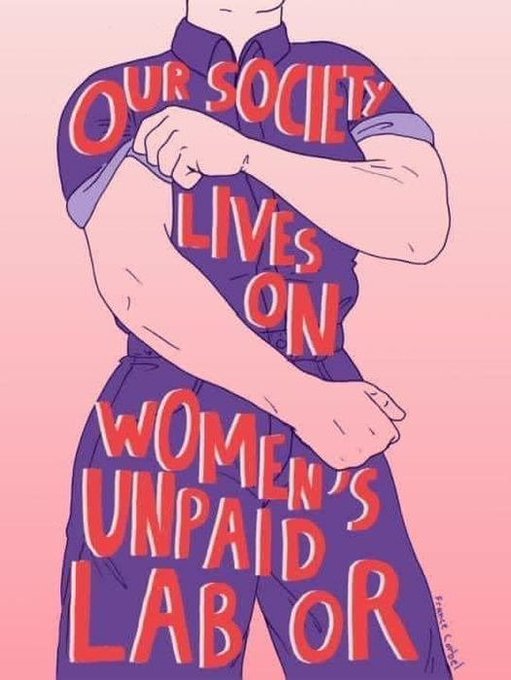
In (Marxian) Feminism, the special property is maleness. Its ideology is patriarchy, that men should lead society. Its winners are men. Its losers are women and, to a certain extent, at least sometimes, homosexual men. These can become feminists when awakened with feminist consciousness. The structure of this society is enforced by misogyny, structural sexism, phallagocentrism, gender normativity, and sex essentialism, which can be both materially and (in multiple ways) structurally deterministic. Its goal is the abolition (or transcendence) of patriarchy.

In Queer Theory, the special property is normalcy. Its ideology is cisheteronormativity, that it is regarded as normal to be straight and not trans. Its winners are cisheterosexuals and people who pass as such. Its losers are the abnormal. These can become allies or queer when awakened with queer consciousness. The structure of this society is enforced by homophobia, transphobia, and other bigotries of normativity, which is both materially and structurally deterministic. Its goal is the abolition (or transcendence) of normalcy and, with it, normativity, i.e., all norms and socially enforced categorical expectations.

In Disability Studies, the special property is able-bodiedness. Its ideology is ableism, that it is in general better and more normal to be able-bodied instead of disabled in some way. Its winners are the able-bodied. Its losers are the disabled (who are disabled by the failure of society to accommodate disability as fully as it accommodates ability, which is realized when disability is in no way any disadvantage at all). These can become disability activists when awakened with a critical consciousness of ability status. The structure of this society is enforced by dis/ableism, which is both materially and structurally deterministic. Its goal is the abolition (or transcendence) of ableism.

In Fat Studies, the special property is thinness. Its ideology is thinnormativity, that it is normal for the human body not to be overweight (in fact, the term “overweight” is problematic because it implies thinnormativity by suggesting an ideal weight exists). Its winners are the thin. Its losers are the fat and bodies of size. These can become fat activists when awakened with a critical fat consciousness. The structure of this society is enforced by fatphobia along with healthism (that it is important and valuable to be healthy), which are both materially and structurally deterministic. Its goal is the abolition (or transcendence) of thinnormativity and expectations about weight and body size.

In Freirean education, the special property is formal education or literacy. Its ideology is one of “educated society,” which values being educated and literate in ways acceptable to the existing system. Its winners are the formally educated and literate, regarded as knowers, and its losers the illiterate, who are actually knowers in their own right, though the system excludes them, their ways of knowing, and their knowledges. They are awakened through political literacy, and conscientization is the process of their awakening. The critically conscious or conscientized are those who have been awakened. The structure of this society is enforced by expectations on literacy and formal education, which are materially and structurally deterministic, relegating the underclass to a “culture of silence,” as Freire has it. The goal is the abolition (or transcendence) of formal education and objective knowledge, and thus the immediate goal is the reappropriation of education into a process of conscientiation and “humanization.”

In Climate Justice, the special property is not being impacted by human-caused climate change. Its ideology is energy abundance (through non-Green energy sources), which are enabled by neoliberalism and imperialism. Its winners are the first world, the fossil-fuel industry, and all privileged classes, who are believed to suffer fewer impacts of climate change. Its losers are the developing and undeveloped world and everybody, especially members of oppressed classes, who benefit least from existing energy sources and suffer the consequences of climate change the most (allegedly). They are awakened through Green activism (and Blue), and they have a climate consciousness. The structure of the existing society is largely enforced by petro-capitalism, which runs a capitalist enterprise on the back of energy abundance produced by oil, coal, natural gas, and nuclear power, all of which are backed by neoliberalism (with regard to energy policy), which have material and structurally deterministic effects. Its goal is the abolition of “Black Energy,” full reliance upon “Green Energy,” the end of the oil, coal, and gas industries, and environmental and Climate Justice (redistribution globally according to alleged climate change production and damages). Its primary objective in branding is “sustainability.”

We could go on (into postcolonial theory, health equity, and on and on), but we will not. In all cases, the mechanism is for the “conscious” to seize the means of production in the relevant domain and use that control to force redistribution and new norms that work toward abolishing the relevant form of special property by abolishing the special access or even its fundamental meaning. Doing so will abolish the special property and thus undo its contribution to the Fall of Man, thus ending the estrangement the existence of that form of special property and its attendant power dynamic produce.

What we see here is that Marxism, once understood properly as a Esoteric faith of societal division and transmutation (in alchemy, by: “divide and unify” or “dissolve and precipitate”), has reared its head in many different forms but has not lost its essential character. One additional example that grows significantly out of all of these preceding but especially the Critical Marxist line bears describing.

In Sustainable Marxism, which obviously has a double meaning, the special form of property is production capacity (in general). Its ideology is shareholder capitalism. Its winners are the one percent. Its losers are the ninety-nine percent, especially women, gender minorities, sexual minorities, racial minorities, residents of the Third World, and all other members of “marginalized groups.” These can become activists on behalf of the Sustainable Development Goals of the United Nations and its 2030 Agenda and by behaving in ways that are ESG compliant (stakeholder-determined Environmental, Social, and Governance standards comprise ESG compliance). Its goal is to abolish shareholder capitalism and replace it with stakeholder capitalism, or “sustainable and inclusive” capitalism, which is not actually capitalism at all but a market-containing command economy not unlike the one in China under the CCP.

The Last Word

It’s time we understand Marxism for what it really is: a cult-religious ideology of transforming the world “back into Eden” by undoing the Fall of man into producing stratified power dynamics through allegedly self-granted access to special property. It arises from a singular error, which is the inability to perceive the legitimacy of a legitimate hierarchy, and thus proceeds by means of ignorant destructive envy. No matter which form of special property is under consideration, it is always the same, and so are its fruits. Restoring liberty and goodness to our lives depends on understanding this.


community logo
Join the New Discourses Community
To read more articles like this, sign up and join my community today
1
What else you may like…
Videos
Podcasts
Posts
Articles
The Stratification Lines of Marxism | James Lindsay
00:01:05
Sustainability and the One Belt One Road Initiative | Michael O'Fallon

Saving American Liberty, Session 5

In this session from the New Discourses event 'Saving American Liberty,' Michael O’Fallon argues that global political, corporate, and religious institutions are jointly reshaping Western society through “degrowth” policies, sustainability mandates, and ideological frameworks like ESG and the UN’s Sustainable Development Goals, which he sees as mechanisms for centralizing control and limiting individual freedom. He contrasts the West’s self-imposed economic contraction with China’s expansion through the Belt and Road Initiative, claiming this shift empowers China while weakening America’s global position. O’Fallon warns that identity-based conflicts, migration pressures, and urban destabilization are fragmenting Western societies into competing tribal enclaves, leaving them vulnerable to foreign influence. He concludes that COVID-era restrictions, digital surveillance, and AI-driven governance signal a broader transition from a ...

01:21:25
Where Race Marxism Came From | James Lindsay
00:00:58
The Nazi Experiment, Vol. 10: Blood, Soil, and the Racial State

The New Discourses Podcast with James Lindsay, Ep. 185

The Nazi Experiment wasn't just an idea. It was an idea put into practice. Putting that idea into practice started with a movement, but it required a totalitarian state apparatus to fully implement, to tremendous disaster. What was Adolf Hitler's real vision for the Nazi State? He makes it plain: the primary, if not sole, purpose of the state is to protect and improve the race. That is, Hitler's state wasn't ethnonationalist as a matter of happenstance but centrally, by design. In that regard, given the realities of Europe and the world, the Holocaust, and additional such racially motivated purges, were completely predictable all the way back to the mid-1920s in Mein Kampf. In this episode of the New Discourses Podcast, host James Lindsay continues his "Nazi Experiment" podcast series with its tenth volume, reading from the second chapter of the second volume of Mein Kampf to show you the horrible reality of the intended Nazi ...

The Nazi Experiment, Vol. 10: Blood, Soil, and the Racial State
Why Fascist Economies Can't Work

New Discourses Bullets, Ep. 136

When it comes to economic organization (not necessarily political organization), we might be tempted to ask why it is that Fascist economies don't work. It seems like they might, after all, once you understand that they still enable what might be called a "deferred free enterprise" system, allowing for the profit motive after the government gets its own. In this episode of New Discourses Bullets, host James Lindsay (featuring a post by Logan Lancing) dives into the problem with Fascist (Stakeholder) economic models on a variety of levels, using both economic theory and historical and contemporary examples to make his point. Join him to understand why we should not readily embrace such a model for ourselves.

Why Fascist Economies Can't Work
Big Government Can't Produce Abundance

New Discourses Bullets, Ep. 135

Government can do many things in the world, but one thing it cannot do is produce abundance and prosperity. Why not? Its incentives are all wrong, and over time they tend to get worse. In this probing episode of New Discourses Bullets, host James Lindsay dives into the intrinsic issues with government when it comes to creating abundance and prosperity, explaining why these are the product of a "problem-solving theory of value" that government is poorly incentivized to work with. Join him for the insights on why expanding the influence of government over the economy will not produce an economy more capable of producing abundance or prosperity (solving problems real people have).

Big Government Can't Produce Abundance
post photo preview
What George Washington’s Death Can Teach Us About Woke
by James Lindsay

President George Washington died at his home on December 14, 1799, at the age of 67. He died, as it turns out, of a particularly bad and sudden upper respiratory infection, most likely strep throat, that the doctors of his day (the best available) did not know how to treat. (Penicillin as a treatment wasn’t discovered until 1928.)

After going out on a cold and wet evening on December 12 to inspect his fields, President Washington returned to Mount Vernon to rest with a tickle in his throat. On December 13, he continued to work outside in the cold, wet conditions, and by evening realized he had a problem. By morning on December 14, he had a full-blown, emergency infection and got Martha to summon help. Doctors were on the scene and went to work that morning.

Not knowing how to treat President Washington’s sudden illness, his doctors made his predicament worse by using the best of 18th century “medicine” on him, starting with extensive blood-letting. In fact, they drained nearly half of the great man's blood from his body hoping to cure him. It made things worse, at the very least weakening him greatly while he was otherwise afflicted.

They also had him drink and gargle a number of potions that would have blistered his throat and increased the inflammation while doing nothing to combat the infection. Some of these included Spanish fly, potions made out of infusions of beetles, and a solution of butter, molasses, and vinegar. They also gave him a completely unhelpful enema.

Washington, certainly partially as a result of his “medical care,” succumbed to this now-trivial disease in under 24 hours, said goodbye to his family as the end drew undeniably near, closed his eyes one last time, and died, allegedly with the words “‘Tis well” being the last words from his lips before he went. That night, America lost a giant, perhaps in an untimely fashion.

Now imagine for a moment that among his doctors one had a stroke of divine inspiration (or connecting the dots between other observations he had made in similar circumstances) that led him to conclude before any treatment began that, in fact, The President was suffering from a simple bacterial infection of the upper airways and trachea. Imagine further that he was able to convince his fellows of this stroke of accurate and correct insight.

Would acquiring this accurate diagnosis have cured President Washington? No, not on its own.

Would President Washington still have succumbed and died of this simple but aggressive infection? Probably, but that cannot be known.

Even if he would have still died, would that diminish the value of the accurate diagnosis? Not at all, and that’s the point.

The accurate diagnosis alone could not have saved President Washington’s life, but one thing we might guess is that understanding that his illness was caused by an invading pathogen growing in his throat that had nothing to do with “bad blood” or “evil humours,” he may well have avoided the blood-letting in his treatment, saving much of his strength for fighting the severe but routine infection.

Furthermore, the potions and concoctions he was given to gargle and drink might have been better purposed to deal with a direct infection, per long experience with animals or other people, and perhaps would have been chosen in a way that was more beneficial or benign, especially if some understanding of the role of inflammation was part of the blessed miraculous insight of our hypothesis. Maybe they would have been chosen only for his comfort and to keep his airways clearer.

It’s very unlikely that his doctors would have realized that a certain strain of mold properly prepared and administered would have surely cured him, but they might have realized their primary focus should have been on keeping him breathing as well as possible while his body fought the infection, potentially preventing many of the other, harmful things they did.

One young doctor did propose such a solution, in fact, recommending a radical new surgical technique at the time called a tracheotomy, which was not performed. Whether or not he understood the situation (likely not), he did understand that the emphasis was to keep Washington breathing until he could recover under his own power (which would have been increased had he not been drained of half his blood and given to drink various potions, some of which were surely unhealthy). Had that surgical intervention been performed cleanly and correctly, many today think, Washington likely would have survived.

In other words, a correct diagnosis might or might not have saved President Washington in that last dark month of the eighteenth century, but it would have certainly achieved at least three effects:

1) It would have ruled out dangerous false “solutions” like blood-letting and perhaps some of the concoctions he was given;

2) It would have focused energy and attention on doing more productive, even if insufficient, things than were done, which combined may actually have saved The President's life; and

3) It still would have been correct and therefore a robust foundation for pursuing and achieving real, reliable solutions to the same problem in future circumstances, independent of Washington’s fate.

That is, getting an accurate diagnosis matters even when the diagnosis itself is not sufficient to solve the problem at hand. The likelihood of finding a viable solution to a problem goes up dramatically with an accurate diagnosis, and the likelihood of avoiding bad false “solutions” in the process also goes up dramatically in this case.

Now let’s turn our attention to Woke, a societal infection if ever there was one.

Woke, which is ultimately a group-based victimhood complex channeled through social philosophy, is always an incorrect understanding of the phenomena of society. It therefore cannot lead to correct solutions, only to ridiculous things like blood-letting (criticism, in metaphor).

It does not matter if we are talking about left-wing Woke, right-wing Woke, postmodern Woke, modern Woke, or premodern Woke. Woke is a petulant misunderstanding of the circumstances, therefore it cannot provide a correct diagnosis. Therefore, again, it cannot, except by a combination of luck and failure, produce a meaningful solution.

To wit, Marx did not have good criticisms of society, capitalism, free markets, free trade, liberalism, feudalism, slavery, or anything else he criticized—as is often asserted—because all of his criticisms relied upon his own modern-era Woke theory of social alienation and conflict that is fundamentally not correct. (It is sociognostic and just as heretical as any other Gnostic heresy, as such.) The solutions he applied are wrong not merely on their own but also because his diagnostic framework is wrong.

Keeping the diagnostic framework while recommending different solutions (right-wing Woke, or Woke Right) will not fix the fundamental problem because the diagnostic framework is still wrong. Therefore, the prescribed solutions will also be wrong. Right-wing Woke, maybe like Washington’s enema, is not an answer to left-wing Woke.

Getting accurate diagnoses about bad social theory—not by using it—is not on its own a solution any more than one of President Washington’s doctors realizing he has a strep infection would have been a cure. It is, however, the foundation for finding a cure, or at least for favoring minimal and palliative care dedicated toward the right objectives (keeping him breathing and full of his own blood while his body fought the infection) rather than taking detrimental wrong turns.

Similarly, Woke theories and obsessions with power, victimhood, and group identity, but for “right-wing” causes, is an easily avoidable wrong turn that can be avoided by understanding that Woke theory and its obsession with power, victimhood, and group identity are the disease itself. Or, more deeply, that both are aspects of the same dialectic that is making our society sick.

I hope Western Civilization can survive, even if we are unaware of the cure. Like the body of President Washington in December 1799, it already has many of the resources (like the Constitution) needed to fight the Woke infection it is currently suffering from—as long as we keep it breathing and don’t unnecessarily weaken it with false “solutions” like more Woke, more criticism, more victimhood, more identity politics, and more obsession with power, even if they’re pointing in the “other” direction.

Read full Article
post photo preview
The Woke Cult of Transgression
by James Lindsay

Perhaps the best analyst of the cult of Maoism, from which Woke derives (including Woke Right, as we’ll see), was Robert Jay Lifton, who was in Hong Kong in the early 1950s interviewing and documenting refugees and exiles from the newly formed People's Republic of China

Lifton wrote books about this including the thorough case-study driven Thought Reform and the Psychology of Totalism: A Study of “Brainwashing” in China (1961). In this book, inter alia, Lifton gives a few vivid descriptions of the cult phenomenon of the “thought reform” environment in China (also translated: “ideological remolding”) that characterizes two aspects of it as what he calls a “cult of confession” and a “cult of enthusiasm

These two cult orientations may be comprehensive of the Maoist Communist milieu, but to them I would add a third, a “cult of transgression,” for modern Woke cult environments and behavior, only there in nascent form in Mao’s People's Republic, at least before the Cultural Revolution. In fact, the “cult of transgression” model is what might distinguish the Cultural Revolution environment (1966–1976) from the rest of Mao’s time in power (from 1949 forward).

The Cult of Confession Dynamic

The “cult of confession,” as Lifton has it, is a key feature of the totalizing cult because creates incredible vulnerability in each individual. The way it works is by getting people to confess to their own wrongdoing, increasingly as defined against the ideological expectations of the cult. The idea is that people would confess to their sins against the cult doctrine and each other in order to bond, avoid punishment, signal adherence and understanding of the doctrine, etc. Lifton describes the phenomenon this way

Closely related to the demand for absolute purity is an obsession with personal confession. Confession is carried beyond its ordinary religious, legal, and therapeutic expressions to the point of becoming a cult in itself. There is the demand that one confess to crimes one has not committed, to sinfulness that is artificially induced, in the name of a cure that is arbitrarily imposed. (p. 425)

Every confession has a number of psychosocial effects. First, it induces massive vulnerability in the confessor. The whole group is hearing things the confessor will be judged for, perhaps harshly. Second, it therefore opens a gate to a carrot-or-stick reaction of punishment or leniency that enables trauma bonding of the confessor to the group and its leadership cadres. Third, it provides catharsis for the confessor and even some of the people witnessing that confession, allowing them to vent the pressures of cult belonging into deeper cult commitment. Fourth, it inspires more people to confess for themselves and, in fact, competitive confession where people try to give bigger and bigger confessions as it goes from one person to the next, amplifying the all the other psychosocial effects

You can easily imagine the last of those characteristics if you’ve ever sat in a class where everyone is supposed to give some kind of introduction of themselves with an update on their emotional growth (yoga classes often do this, for example). The first few people say a little, and by the end it’s a sob-fest with long, detailed stories of high emotional content and valence and tons of flowing empathy. As Lifton explains, this is a semi-performative act of self-initiation into a totalizing cult environment,

But as totalist pressures turn confession into recurrent command performances, the element of histrionic public display takes precedence over genuine inner experience. Each man becomes concerned with the effectiveness of his personal performance, and this performance sometimes comes to serve the function of evading the very emotions and ideas about which one feels most guilty. (p. 426)

Lifton adds the following color to the situation,

The totalist confession takes on a number of special meanings. It is first a vehicle for the kind of personal purification which we have just discussed, a means of maintaining a perpetual inner emptying or psychological purge of impurity; this purging milieu enhances the totalists’ hold upon existential guilt. Second, it is an act of symbolic self-surrender, the expression of the merging of individual and environment. Third, it is a means of maintaining an ethos of total exposure—a policy of making public (or at least known to the Organization) everything possible about the life experiences, thoughts, and passions of each individual, and especially those elements which might be regarded as derogatory. (pp. 425–426)

Now imagine that but confessing evils you have committed, including against imaginary crimes. The Woke Left made strong use of this “cult of confession” dynamic. DEI meetings were, in essence, exactly this program rammed into a professional workplace setting. Accusations of mysterious “structural” racism or transphobia or whatever were leveled, and everyone has to look for ways they’ve contributed or been complicit and confess it all in front of the group (Lifton: “confess[ing] to crimes one has not committed, to sinfulness that is artificially induced, in the name of a cure that is arbitrarily imposed

There is also much confessing of “I used to be like this but then I learned how much harm it causes to people of color for white people to go hiking” or some such claim of self-improvement—or, “ideological remolding,” or, thought reform. Cult-like mantras follow: “Hiking-while-white encodes whiteness into the recreation, hiking culture, and the outdoors, which is exclusionary.” You get the idea. Lifton explains

The cult of confession can offer the individual person meaningful psychological satisfactions in the continuing opportunity for emotional catharsis and for relief of suppressed guilt feelings, especially insofar as these are associated with self-punitive tendencies to get pleasure from personal degradation. More than this, the sharing of confession enthusiasms can create an orgiastic sense of “oneness,” of the most intense intimacy with fellow confessors and of the dissolution of self into the great flow of the Movement. And there is also, at least initially, the possibility of genuine self-revelation and of self-betterment through the recognition that “the thing that has been exposed is what I am.” (p. 426)

The purpose of this ritual, Lifton tells us, is ultimately horrifying and fundamental to its nature as a totalitarian practice:

The assumption underlying total exposure (besides those which relate to the demand for purity) is the environment’s claim to total ownership of each individual self within it. Private ownership of the mind and its products—of imagination or of memory—becomes highly immoral. (p. 426)

Thus we come to understand the dynamic of a cult of confession as central to that of a totalizing cult, thus the totalitarian environment.

The Cult of Enthusiasm Dynamic

Alongside the “cult of confession” dynamic in totalitarian environments, Lifton characterizes the “cult of enthusiasm” as partially derivative to the cult of confession and partly free-standing. In short, the cult of enthusiasm refers to a strong current of enthusiasm for supporting the cult program, beliefs, and its leadership. It’s also usually highly emotional in nature and meant not to create and manipulate guilt and shame so much as to whip up frenzy, mania, and enthusiasm in the participants. As Lifton explains,

Thought reform has the opposite ethos [to traditional Chinese culture of self-restraint], a cult of enthusiasm (enthusiasm in the religious meaning of rapturous and excessive emotional experience), with a demand for total self-surrender. It is true that thought reform implies a promise of a return to restraint, and of an attainment of relaxed perfection some time in the mystical Communist future, just as Confucius claimed that these ideals had existed during an equally mystical past or “golden age”— but enthusiasm and restraint, once established, are not always so easily controlled. (p. 397)

Notice that Lifton characterizes this activity as driven by a “demand for total self-surrender.” Surrender—or submission—is a key component of the totalizing (or authoritarian) cult environment, as submission to the ideology and its perceived authorities is a key aspect of cult (and authoritarian) psychology and sociology. Lifton here, though, describes a kind of ideological innervation through this surrender of self to the cult and its ambitions.

Now, part of the ideological innervation Lifton describes here can be done directly, particularly in the People’s Republic of China context in terms of enthusiasm for the party and party leadership (esp. Mao) worship or various icons that were held up as ideal comrades. Communist doctrine tends to be held maniacally, as Lifton relates through one of his interview subjects, a Catholic priest who had been wrongly imprisoned by Mao’s thugs, exhibiting characteristic symptoms of a mind that had been broken to the point of admiring its tormenters:

The Communists have tremendous enthusiasm in their outright devotion to their doctrine. … What they believe, they do. … We are divided between doctrine and practice. … There is a discrepancy between religious life and doctrine. Therefore we are weak. … They are superior to us in carrying out their actions. … They have dialectic and a strange use of their proofs. … They have a keen instinct for finding out what each man may be doing against his own creed and his work. … I don't know where human beings can find such proofs. (p. 140)

Some of the mania of the “cult of enthusiasm” in the totalizing environment is derivative to the cult of confession, however. After confessing, there often follows an enthusiasm to “do better,” with people frantically and manically participating in the cult’s behaviors and rituals, including denunciations of class enemies or those who haven’t confessed sufficiently or at all. That is, victims become perpetrators through this transformation from one cult dynamic to another.

Psychologically, the cult of enthusiasm dynamic energizes members of the cult, helps them bond in a shared sense of activity and worldview, reinforces the cult’s beliefs, inspires loyalty and commitment, and reinforces the sense of the high social cost of dissent while also discouraging it through general social pressure and enthusiasm for the common cult direction. The highly emotionally charged atmosphere of this cult dynamic is instrumental to binding and orienting people with the cult’s doctrines

The Woke Left does this as well, as indicated by my deliberate wry usage of the phrase “do better” just above. These denunciation rituals—which relate to what Maoists called “speaking bitterness”—are obvious and, in fact, more or less characterize Woke Left behavior in most people’s minds. They also present a general enthusiasm for “liberation” and a “socially just world,” as we hear in ridiculous terms like “trans joy.” Every Pride parade was an increasingly libidinous “cult of enthusiasm” exercise, as were many of their other rallies, protests, demonstrations, and so on. (This has led me in the past to say that protest is Woke church.) They were something more too, though: deliberately transgressive, which is indicative of a Cultural Revolution program where “change agents” destroy the norms of the past for a brighter future.

The Cult of Transgression Dynamic

Lifton, writing well before the Cultural Revolution, does not focus in Thought Reform and the Psychology of Totalism upon any such “cult of transgression” dynamic, but the seeds of this particularly pernicious form of personal and societal destruction are clearly present. Of course, they must be, because they represent the same Jacobin spirit from the French Revolution that runs through all of Communism. Lifton, describing the situation of one of the captives in Mao’s People’s Republic makes this apparent:

He also developed the concept that it was necessary to degrade oneself “to convince the Communists that you are with them—and not in grace in the bourgeois world—so that the Communists would feel that you were so degraded in the bourgeois world that you could not go back.” (p. 166)

It’s difficult to read those words and not recognize the self-humiliation rituals of Woke Leftism today, especially as we might see them in Queer Activists or around “Pride” displays. The words “so degraded in the bourgeois world that you could not go back” haunt the participants in those displays perfectly. This self-degradation as a means of distinguishing oneself from the “bourgeois” (or normal, or fallen, or mundane) world is also the basis for a cult dynamic in Wokeness, though: a cult of transgression.

The purpose of Woke theory is often to transgress norms and boundaries, especially in Queer Theory, which is explicitly formulated to do this and only this. bell hooks (name intentionally not capitalized) even published a famous book called Teaching to Transgress (based on Paulo Freire’s “Marxification” of education model, as I called it, itself based on Mao’s thought-reform methods) that highlights the centrality of this behavior in a semi-formal academic way, even though, again, every Pride demonstration made it obviously clear in a more tangible and blatant way. hooks makes clear that there’s a connection between enthusiasm and transgression, as does every monstrosity performed in the name of “Pride”:

I longed passionately to teach differently from the way I had been taught since high school. The first paradigm that shaped my pedagogy was the idea that the classroom should be an exciting place, never boring. And if boredom should prevail, then pedagogical strategies were needed that would intervene, alter, even disrupt the atmosphere. Neither Freire’s work nor feminist pedagogy examined the notion of pleasure in the classroom. … Excitement in higher education was viewed as potentially disruptive of the atmosphere of seriousness assumed to be essential to the learning process. To enter classroom settings in colleges and universities with the will to share the desire to encourage excitement, was to transgress. (p. 7)

The idea of the cult of transgression is essentially the idea of teenage rebellion but turned deeply pathological. Teenagers naturally rebel against their environments, parents, norms, etc., just as a way of testing out boundaries in the effort to stake out an independent adult identity for themselves. They often do this in tightly knit social groups that develop their own slang language, set of in-group jokes, and sets of transgressions that prove their defiance, and they often play off one another to increase the transgressive capacity of their bubble until it strikes various boundaries from which it is supposed to learn important lessons about public versus private behavior, social norms and limitations, etc. That’s normal, but it can also be the basis for a cult of transgression defined by people pushing the boundaries of prevailing norms through cult doctrine and eventually socially and psychologically isolating themselves from those outside the cult

In organic situations like with teenagers, this transgressive behavior is likely mostly harmless and even in some ways edifying, but when there is a directed cult ideology in play, it can be a potent cult recruitment and commitment tool that takes the form of what we might call the “ritual of transgression

The Ritual of Transgression

The ritual of transgression is best described by saying that everyone in a group within the cult, or the cult itself, competes to transgress the expected norms of behavior and thought a little more but always in a particular direction in line with cult doctrine. You can imagine a group of young Critical Race Theorists sitting around starting with a transgressive statement like “the police are racist” (not worthy of respect) and going down a deep rabbit hole of wanting to defund police, abolish police, abolish prisons, imprison police, kill police, etc. You can also easily imagine another rabbit trail in which “police are racist” turns into discussions of why everything else is racist too, even hiking and probably the mountains people want to hike on

Radical feminist behavior over the last fifty years (thus Woke activism in many ways) can almost be defined by participation in a combination of these three cults with the tip of the spear being the cult of transgression; hence bell hooks’s book title. They did this in both theory (blaming men, patriarchy, misogyny, “rape culture,” etc., for more and more ridiculous things) and in practice (say, making themselves deliberately hateful and ugly to “reject gender norms” and “being nice” and blaming men for thinking they're ugly and hateful). They were, and are, as Lifton has it, making themselves “so degraded in the bourgeois world” that they cannot “go back.”

The Maoist cult did this too, particularly in the Cultural Revolution under the doctrine of “Smash the Four Olds,” which admittedly came long after Lifton’s research (mid-1950s) and publication of Thought Reform (1961). Young people rejected their elders (became transgressive) and went on to “smash” anything reminiscent of “old” society (today: “Boomer mentality

These actions were blatant transgressions against the existing society, by the way. Streets were renamed, temples desecrated, relics looted, smashed, and burned, and even people were killed or struggled into suicide over their adherence to “old ways of thinking” or “old habits” (today, again: “Boomer mentality

In the cult of transgression, the ritual is to transgress to the limits of tolerability with no backtracking and to do so in a social environment where everyone is going a little deeper into the ideology and doctrine of the cult. In the process, through the transgressions themselves and the cultish identification with them to which they become increasingly socially bound, the cult isolation and commitment deepens. The dynamic is partly by these transgressions becoming the bases for “in-jokes” they can’t share elsewhere because they’re too transgressive, which is also socially isolating, and partly through a shared sense of rule-breaking. The transgressors are now in it together and defined by opposing the world. As you might imagine, this slope is extremely slippery, and past a certain point, there’s almost no way back, psychologically or socially.

Ultimately, this creates massive social co-dependence on other members of the cult and a self-isolation from outsiders (who will eventually have to be driven away) who might act as moderating forces. The transgressors cannot relate well to normal society any longer while maintaining a sense of degenerate superiority over it, literally in the mold of “Left-hand” or “black” magic. They’re bound together as self-satisfied outsiders who believe they’ve transcended a false moral universe through their acts of transgression

Of course, this perverse antinomian behavior sets up exactly the kinds of guilt and shame mechanisms that drive the cult of confession dynamic forward. The false light of enthusiasm fills in the growing darkness as a psychological and social cover, and the false enlightenment of shedding morality through transgression rationalizes the participants’ fall. Coming to believe morality to be false and imposed, thus in need of transgressing in the first place is what it means to become “Woke.” The participants’ “wake up,” from their own perspectives, to a higher morality that transcends and disparages the real thing.

Woke Cult of Transgression

A peculiar feature of the cult of transgression is that it’s like a system of social valves that increasingly lock a participant into the cult ideology and its most radical views. It even defines the vanguard of the Woke cult’s detachment from reality. That is, participants cannot easily go backwards without a total break from the cult and its totalizing environment

Once a person transgresses morality and society to a certain degree and the cult accepts that level of transgression or extremism, to back off or to moderate at all is actually to violate the terms of the cult of transgression itself. At that point, the cult will turn on the participant for denying the ritual

All participants in a cult will eventually participate in the punishment of hypothetical or real moderates or eventually “traitors,” so they will each know that more than social rejection awaits them if they deviate or show any sobriety against the cult environment. Put differently, the cult of transgression dynamic is a radicalization vehicle with no safe escape hatch and that becomes harder to escape the longer one participates in it and the deeper one gets

Take, for example, a cult of transgression dynamic that calls everything racist from a Critical Race Theory perspective. Suppose someone says something isn’t racist after someone else in the cult transgresses the boundary of saying that it is. According to the rules of the cult, that poor reasonable person is now maintaining racism, so they’re a racist—so they’re a traitor; so they’re evil. Punishment will ensue

Not only can we easily imagine dozens of examples of this pattern of behavior on the Woke Left from recent memory and experience, we can also credit it with the whole of the “transgender” phenomenon. Radical feminists wanted to say “gender is a social construct,” so they had sacrificed access to a place of epistemic authority necessary to stop a movement claiming “sex is a social construct”—or any of its derivatives, like that men who claim to be women belong in women’s sports punching them in the face and breaking their skulls (which is a huge transgression, when you think of it that way). They just got called “TERFs” and expelled from the vanguard of their own movement while the transgressive cult marched on without them

The Woke Right’s Cult Dynamics

Now, of course, Woke Right circles exhibit all three of these cult dynamics too, most notably the cults of enthusiasm and transgression. In fact, those largely define “Woke Right” in a functional sense

The Woke Right is wild-eyed (enthusiastic) with the idea of “winning” instead of “always losing because of ‘muh principles.’” Principles are therefore expendable against the cult of enthusiasm dynamic of “winning,” and the values and norms upon which those principles are based will have to be transgressed as a matter of creating permission structures to pursue more unprincipled “winning.” As a result, nearly everything they do (under the misapplied brand name of being “based”) is transgressive of the norms of both Woke and through illegitimate conflation polite and normal liberal society. (Yes, this makes Woke Right a “queering” movement in many ways, just like the Woke Left

The word the Woke Right misuses internally for its cult of transgression is “based,” which has nothing to do with being based in reality or principle. For them, being “based” does not mean to be unafraid to state uncomfortable truths against social pressure while maintaining your values; it means saying edgy things you’re not supposed to say in polite society or under Woke hegemony. That is, it means being transgressive, or, in the Woke Left parlance for the exact same thing, being “queer,” but in a “trad” way. Their primary cult of confession dynamic is in confessing to having not been based enough to transgress earlier or further than they did in the past.

Woke Right social dynamics tend to involve competitively saying or expressing more “based” (that is, Woke or queer-trad) things, whether that be racist, sexist, anti-gay, Jew-hating or blaming, patriarchal, chauvinistic for their own groups, or extreme (anti-Constitutional) MAGA policy positions or reactions to politics relevant to MAGA policy goals. To go backwards against these transgressive cult-social values is to be labeled and treated as “controlled opposition,” “cucked,” “neocon,” “warmonger,” and a long litany of other names, or simply and in Red-Guard fashion “Boomer minded.” Such is verboten in the Woke Right cult

In the Woke literature, the principle of the cult of transgression is ultimately characterized most blatantly by Herbert Marcuse in “Repressive Tolerance” (1965), where he calls the principle “liberating tolerance.” He defines it thusly,

Liberating tolerance, then, would mean intolerance against movements from the Right and toleration of movements from the Left. As to the scope of this tolerance and intolerance: … it would extend to the stage of action as well as of discussion and propaganda, of deed as well as of word.

Another way to term liberating tolerance would be “No Enemies to the Left (NETTL).” The parallel concept in the Maoist cult would be “No Enemies of Mao Zedong Thought,” and in the Woke Right cult would be “No Enemies to the Right (NETTR),” which is explicitly and strongly argued for and held to in the Woke Right cult and its various cults of transgression and enthusiasm. These forces are all the same and serve only the function of deepening radicalization, commitment, and cult communal self-isolation

This cultish program on the Woke Right is underwritten by the logic of what is called the “friend-enemy distinction” in politics. Where Karl Marx divided the people into “oppressor and oppressed,” Mao Zedong separated the population into “the people” and “the enemies of the people,” and Herbert Marcuse broke the population into “the Left” and “the Right,” the Nazi philosopher Carl Schmitt described politics as the dynamic between “friends” and “enemies” who are pitted in an existential battle over the direction of society. It doesn’t really matter which formulation we use, however; the effect is the same: destructive cult-like tribal politics based on mutual enmity that becomes increasingly totalitarian and self-justifying in the name of the conflict that is explained to be defining of a given sociopolitical moment.

Lifton gave us the tools to understand these dynamics, however, as they are the dynamics of totalism—a cult environment. The cult dynamics of confession, enthusiasm, and transgression are defining of a psychological and social environment. They are also indicative of being “Woke” in the sense of having “woke up” to a pervasive “false morality” in society that must be transcended with themselves as the intrepid vanguard movement away from the old (repressive) and into the new (liberated).

None of these “Woke” cult dynamics is healthy for their participants or for the society plagued by them. All should be understood for what they are: dark, destructive cult dynamics indicative of the totalitarian condition, thus the enemies of peace, freedom, and civilization. Thus we can understand Woke across its many manifestations through history and today—and reject it for the sickness that it is.

Read full Article
post photo preview
Catharsis or Civilization: A Statement from Our Founder on the Life of Charlie Kirk
by James Lindsay

I've been trying to share a particular message for a couple of years now, and I can never quite find the words. I doubt I will tonight, but I have to try again because I watched my great friend get murdered over it today.

We have a choice: catharsis or civilization.

There's no other choice for us. We can have a civilization, where people are civilized enough to live, work, and trade with one another in a productive way, a safe way, a trustworthy enough way, or we can abandon it for the pursuit of letting the negative emotions of the past years, decade, or decades consume us.

There's no other choice.

If we choose catharsis, we let our emotions, our Pathos, get the better of us. We turn to our anger and look to give it more justifications. We turn to our frustration and seek an orgiastic release through whatever deeds vents it. We turn to our oppression, our rage, our despair, our fear, and we let it flow through us until the Pathos pours out and covers the land in what will eventually be fire and blood.

Catharsis is tempting, and stepping into it will be libidinous, orgiastic, elevating, and divine, until we realize that it's the feast of demons upon everything we could have built and everything we could have passed on to our children and our posterity.

Civilization is harder. It's bitter, in fact, in comparison to catharsis. It means swallowing hard and taking all those negative emotions and sublimating them into something productive, something that builds rather than makes us feel better. Civilization feels like injustice, in fact, even though it is the only basis for justice outside of Heaven and Hell, if they exist.

If we choose civilization, we're allowed to be mad, but we must temper our anger into right action that builds something to leave a better world, which will dissolve it, of course. We're also allowed to be frustrated, but we must sublimate our frustration into the dedicated search for real and lasting solutions to our problems in a civilization worth living in and passing to our children. We are not allowed to despair, though, and we cannot persist in fear. We must have faith that swallowing and metabolizing all of our negativity to turn it into a flourishing society is possible and worth it, and faith will drive out fear and is the mortal enemy of despair.

Civilization is not available on the wide path. It is the narrow path, at least so far as worldly life goes. Veer too far to one side or the other, or even for too long a moment forget your purpose or principles, and you lose the path, lose civilization, and lose everything worth having.

Without civilization, though, we will find ourselves in a terror beyond our comprehension. Maybe it will be like the philosopher Thomas Hobbes described it in the wake of the terrible English Civil War, when civilization was nearly thrown aside. Violent, solitary or tribal, nasty, brutish, short, a wicked and selfish war of all against all. It looks like the favelas of Brazil.

Maybe we'll end up conquered, fighting among ourselves while our enemies feast on our folly. Maybe we'll end up holding it together, for a little while anyway, under a tyrant who can, for a time, make it all stop and demand order. Maybe we all just end up learning Mandarin and get along mastering the ins and outs of social credit existence.

Civilization is worth fighting for, and catharsis is the kind of momentary pleasure followed by pain that every virtue stands in opposition to. In a civilization we, and each of our children after us, can live as individuals, free to pursue our dreams in sufficient safety and opportunity to generate abundance. Catharsis will be a groupish disaster with all the allure and hangover of a drunken mosh pit.

Again, I'm not expressing myself the way I see this issue in my mind. It's such an important message that I just can't get right, no matter how I try.

What I will say is that, for any differences in the particulars my great friend Charlie Kirk and I have had, Charlie Kirk stood for, lived for, and acted to his dying breath for civilization. He was far too temperate and wise, even at 31, for catharsis.

How can I be sure?

Under strange circumstances once, I found myself out on a skiing boat on a lake with Charlie Kirk. Music was playing, we were having a good time enjoying the morning. Charlie, with his standard grin, bare chest in the sun, laughed a little and explained himself, "I had fun once, guys, and I hated it."

Then he made our host change the music from something fun and hip to... classical. And we ran up and down the lake alongside all the other party boats listening to Bach, Vivaldi, and Stravinsky, not having fun even once and loving it. Charlie Kirk lived for civilization, and nothing remotely like catharsis would have been near his mind, heart, or soul, even in its darkest, most frustrated moments.

Charlie wanted to win, but he wanted to win so that we can move away from evil and move away from cathartic, orgiastic destruction and toward civilizational order, where his family and children could grow up as strong, proud Americans.

More than that, Charlie lived for Jesus, the Logos, as He is named in John 1. He knew the difference between the Logos and the Pathos, human though he was. He understood civilization is built on the rock of Logos, and that it can never be built on the churning sands of Pathos.

That's how I know that Charlie understood the choice I still cannot articulate. We have two options, and only two. They are catharsis and civilization. Charlie Kirk lived that we would have civilization.

May Charlie Kirk not have died such that we spiral into catharsis and evil.

Read full Article
See More
Available on mobile and TV devices
google store google store app store app store
google store google store app tv store app tv store amazon store amazon store roku store roku store
Powered by Locals